Smart Drone
- Home
- Services
- Smart Drone
Smart Drones
Smart drones—also known as Unmanned Aerial Vehicles (UAVs) integrated with sensors, GPS, AI, and automated spraying systems—are transforming multiple public safety and environmental management sectors. Their ability to operate in dangerous, remote, or time‑critical environments makes them particularly valuable for firefighting, precision agriculture, and mosquito control programs. Across these domains, drones improve efficiency, reduce human risk, increase precision, and minimize environmental impact compared to traditional methods.
Smart Drones for Firefighting, Agriculture, and Mosquito Control
Role of Drones in Firefighting Operations
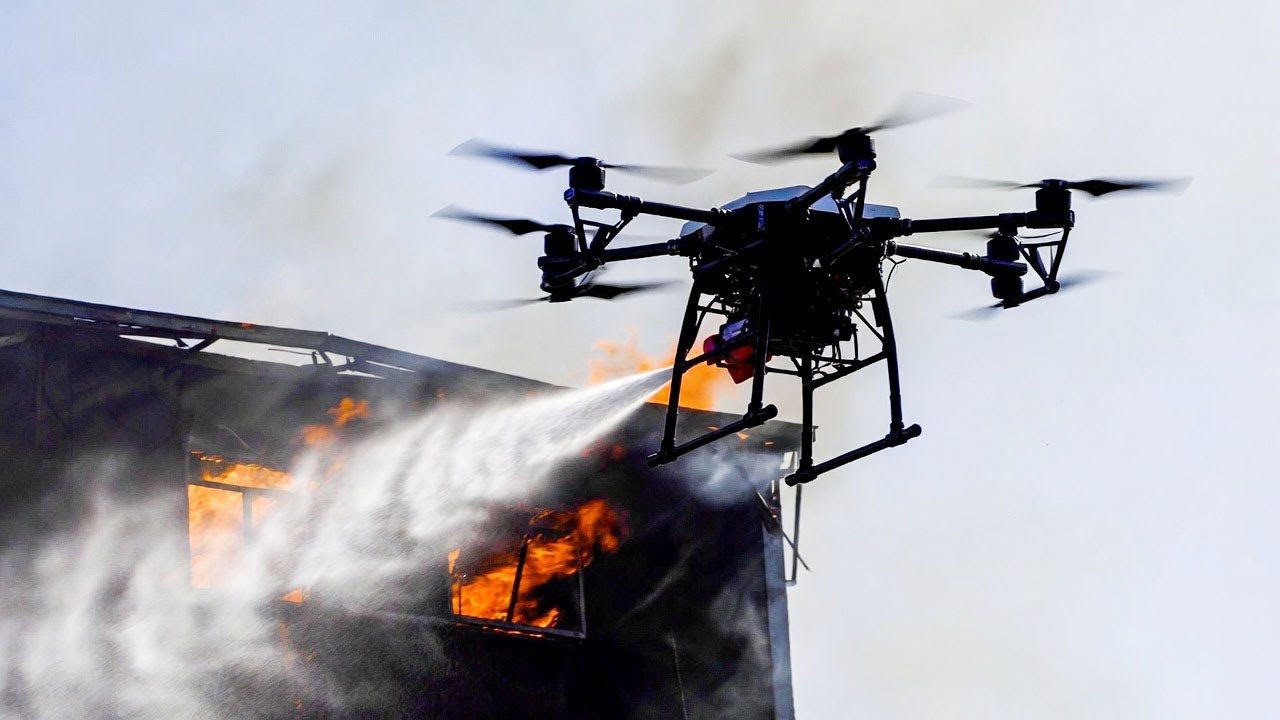
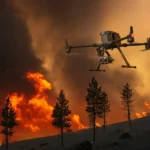
Firefighting drones act as “eyes in the sky” by providing real-time aerial intelligence to incident commanders. Equipped with thermal imaging cameras, high‑resolution optical sensors, GPS, and AI-assisted mapping, drones can quickly assess fire spread, identify hotspots, locate trapped victims, and evaluate structural integrity without putting firefighters at risk.
Drones are now widely used in:
- Wildfire monitoring and perimeter mapping
- Urban and industrial fire assessment
- Search and rescue in smoke-filled structures
- Post-fire damage assessment
In many countries, including Australia and the United States, fire departments deploy drones within minutes of arrival, significantly improving situational awareness during the early and most critical stages of a fire.
Fire Suppression and Chemical Deployment
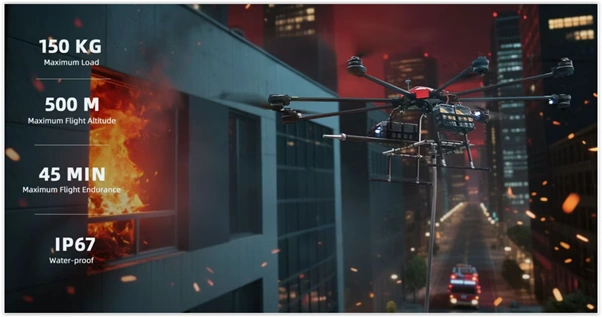
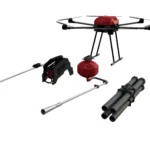
While most firefighting drones are used for surveillance, newer heavy-lift drones can carry firefighting agents such as fire retardants, water capsules, or fire‑suppressant balls. These drones are especially effective in:
- High-rise fires
- Forest canopies
- Narrow industrial corridors
Droppable fire-retardant payloads can suppress small fires before they escalate, particularly in hard-to-reach areas where helicopters or ground crews cannot safely operate.
Advantages and Limitations
Advantages
- Reduced firefighter exposure to heat and toxic smoke
- Faster situational assessment
- Lower operational cost than manned aircraft
Limitations
- Limited payload capacity
- Battery constraints in extreme heat
- Regulatory airspace restrictions
Despite limitations, drones are increasingly considered an essential part of modern firefighting strategy.
Precision Agriculture Overview
Agricultural spraying drones are designed to apply pesticides, herbicides, fertilizers, and nutrients with high spatial accuracy. Using RTK GPS, terrain-following radar, and AI flight planning, these drones ensure uniform spray distribution while minimizing chemical drift and waste.
Modern spray drones can cover 20–40 hectares per hour, depending on payload and terrain, making them especially valuable during narrow weather windows.
Chemical Spraying Capabilities
Smart agricultural drones carry tanks ranging from 10 to 100 liters and use atomizing nozzles that control droplet size to match crop and chemical requirements. Variable-rate spraying allows differential application based on crop health, pest density, or soil condition, reducing total chemical usage by up to 30–50%.
Benefits Over Traditional Methods
- No soil compaction (unlike tractors)
- Safer operations—no human exposure to chemicals
- Ability to operate on slopes, wetlands, and rice fields
- Reduced labor and fuel costs
In Australia, CASA-approved agricultural drones are increasingly adopted for vineyards, grain farms, and plantations due to terrain adaptability and efficiency.
Importance of Mosquito Control
Mosquitoes are vectors for diseases such as malaria, dengue, Zika, and chikungunya. Controlling mosquito populations, especially at the larval stage, is crucial for public health. Traditional methods—truck-mounted sprayers or manned aircraft—are costly, imprecise, and unsuitable for wetlands or dense vegetation.
Drone-Based Mosquito Spraying
Smart drones are increasingly used to spray larvicides and adulticides directly onto breeding sites such as:
- Stagnant water
- Marshlands and wetlands
- Rice fields
- Urban drainage zones
Drone spraying enables low-volume, targeted application, which aligns with Integrated Mosquito Management (IMM) strategies recommended by health authorities.
Public Health and Environmental Advantages
- Reduced chemical exposure for operators
- Significantly lower environmental impact
- Precise treatment of high-risk zones only
- Quiet and minimally disruptive in residential areas
According to the American Mosquito Control Association, over 50% of mosquito control agencies in the U.S. already use drones, with many more planning deployment due to their effectiveness and cost efficiency.
Cross Sector Comparison
| Criteria | Firefighting | Agriculture | Mosquito Control |
|---|---|---|---|
| Main Purpose | Threat detection & suppression | Crop health & yield | Disease prevention |
| Payload Type | Sensors, fire retardant | Pesticides, fertilizers | Larvicides, insecticides |
| Key Benefit | Human safety | Precision & efficiency | Public health protection |
| Environment | Extreme heat & smoke | Fields & plantations | Wetlands & urban zones |
Challenges and Regulatory Considerations
Across all applications, common challenges include:
- Airspace regulations and licensing
- Battery limitations
- Weather sensitivity
- Public perception and privacy concerns
However, regulatory frameworks are evolving rapidly as governments recognize the safety and environmental benefits of smart drone deployment.
Conclusion
Smart drones represent a transformational technology for firefighting, agriculture, and mosquito control. By combining automation, precision spraying, AI analytics, and remote sensing, drones significantly improve operational effectiveness while reducing human risk and environmental damage. As battery technology improves and regulations mature, smart drone systems are expected to become a standard tool across emergency response, food production, and public health sectors worldwide.
Cost–Benefit Analysis of Smart Drone Deployment
The economic value of smart drones lies not only in reduced operating costs but also in risk mitigation, efficiency gains, and long‑term societal benefits. While initial capital investment can appear significant, lifecycle analysis consistently shows that drone‑based operations deliver lower total costs and higher operational returns than traditional methods in firefighting, agriculture, and mosquito control.
Firefighting
Drones
Cost Components
Initial Costs
• Firefighting drone (thermal camera, GPS, obstacle avoidance):
USD $5,000 – $25,000 per unit
• Heavy-lift or fire suppression drones:
USD $30,000 – $60,000 per unit
• Training, licensing, and software:
USD $2,000 – $5,000 annually
Operational Costs
• Battery charging and maintenance:
Low (electric-powered)
• Average hourly operating cost:
USD $20–$50/hour
Comparative Cost Savings
| Method | Avg. Operating Cost per Hour |
|---|---|
| Helicopter firefighting | USD $1,500 – $5,000 |
| Fixed wing aircraft | USD $6,000 – $10,000 |
| Smart drone | USD $20 – $50 |
Benefits
Quantifiable
- 90–99% reduction in aerial reconnaissance costs
- Faster hotspot detection reduces spread damage costs
- Reduced firefighter injury and insurance claims
Non‑Quantifiable
- Improved decision‑making
- Ability to operate in zero‑visibility conditions
- Night‑time and indoor fire assessment
Cost–Benefit Summary:
Fire departments typically recover drone investment within the first major fire season, especially when drones replace helicopter reconnaissance flights.
Agricultural Spray
Drones
Cost Components
Initial Costs
• Agricultural spray drone (10–40 L):
USD $10,000 – $25,000
• Large-capacity drones (50–100 L):
USD $30,000 – $50,000
• Batteries, chargers, spares:
USD $3,000 – $6,000
Operational Costs
• Electricity vs diesel fuel
• One operator can manage multiple drones
Cost Savings and Efficiency Gains
| Metric | Traditional Spraying | Drone Spraying |
|---|---|---|
| Chemical usage | High (overlap, drift) | ↓ 30–50% |
| Labor requirement | 3–5 workers | 1 operator |
| Soil compaction losses | 5–10% yield loss | None |
| Fuel cost | High (diesel) | Very low |
Annual Financial Impact (100 Hectare Farm Example)
- Chemical savings: USD $2,000 – $6,000/year
- Labor savings: USD $3,000 – $8,000/year
- Yield improvement: 3–7% increase
Cost–Benefit Summary:
Most medium to large farms achieve ROI within 1–2 growing seasons, with continued savings thereafter.
Mosquito Control
Drones
Cost Components
Initial Costs
• Spray drone (small–medium capacity):
USD $8,000 – $20,000
• Sensors and mapping software:
USD $2,000 – $4,000
Operational Costs
• Low volume spraying uses minimal chemical
• Electric operation cuts fuel and maintenance costs
Cost Comparison: Mosquito Control Methods
| Method | Cost per Area Treated |
|---|---|
| Helicopter | Very High |
| Truck mounted sprayer | Medium |
| Backpack/manual | High labor |
| Smart drone | Lowest overall |
Benefits
Direct Economic Benefits
- Up to 70% reduction in larvicide volume
- Fewer repeat treatments
- Reduced workforce injury and exposure risks
Public Health Benefits
- Lower disease treatment costs (malaria, dengue)
- Faster response to outbreak hotspots
- Improved community acceptance due to precision spraying
Cost–Benefit Summary:
Mosquito control agencies report lower per hectare treatment costs within the first year and significant long term savings from disease prevention.
Cross Sector Cost–Benefit
Across all three applications, smart drones demonstrate a strong positive economic case. Although upfront investment is required, the combination of:
- Reduced operating costs
- Improved efficiency
- Enhanced safety
- Long‑term public and environmental benefits
results in rapid return on investment and sustainable cost savings. As regulations and technology mature, the cost‑effectiveness of smart drones will continue to improve, making them indispensable tools across emergency response, agriculture, and public health sectors.
| Sector | Payback Period | Key Financial Advantage |
|---|---|---|
| Firefighting | 6–18 months | Aircraft cost replacement |
| Agriculture | 1–2 seasons | Chemical + labor savings |
| Mosquito control | < 1 year | Precision + health savings |
Start your project with cinematic drone visuals.
Lorem ipsum dolor sit amet, consectetur adipiscing elit. Ut elit tellus, luctus nec ullamcorper mattis, pulvinar dapibus leo.